
Loading...
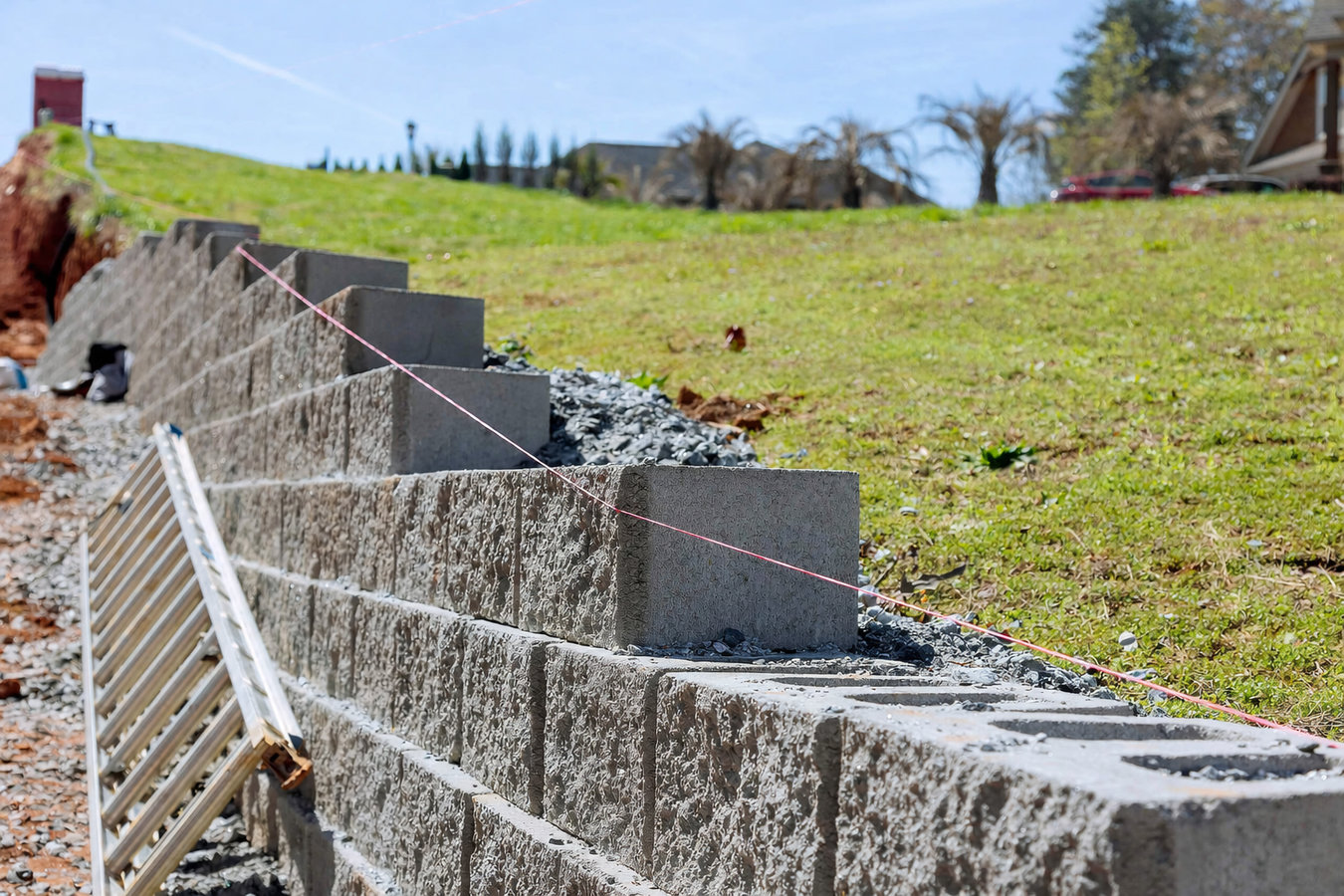
Tyler soil washes downhill after every hard rain. We build retaining walls with proper drainage behind them so your landscaping, garden beds, and yard stay exactly where you put them.
Retaining wall construction in Tyler involves excavating the base of the slope, setting a level foundation course, building the wall in layers from concrete block or natural stone, and installing gravel backfill and drainage pipe behind the wall - most residential walls under four feet tall take two to four days from start to finish.
The wall itself is only part of the job. The drainage system behind it is what keeps the wall standing for decades. Without gravel backfill and a drainage outlet, water pressure builds up behind the structure after every rainstorm - and that pressure is what makes walls lean, crack, and eventually fail in Tyler's wet seasons.
Retaining walls often work best as part of a broader yard improvement. Homeowners who want to turn a sloped lot into usable outdoor space frequently combine a retaining wall project with masonry restoration on adjacent structures or concrete block walls for additional boundary definition.
Bare dirt streaks, muddy runoff across your driveway or patio, or mulch migrating downhill every time it storms are signs your slope is eroding. Tyler gets about 47 inches of rain a year, and erosion on clay soil tends to get worse each season - not better on its own.
A wall that used to stand straight but now tilts forward or bows outward is under pressure it was not designed to handle. This is especially common in Tyler's clay soil, where seasonal swelling and shrinking gradually push against the wall from behind. A tilting wall is not a cosmetic issue - it is a structural one.
Horizontal cracks running along the face of a wall, or cracks in the soil just behind the top of the wall, are early warnings that the wall is starting to give way. These do not improve with time. The next heavy rain adds more pressure to a structure that is already failing.
If you want to add a garden bed, patio, or level play area on a sloped part of your yard, a retaining wall is often the only way to make that space usable and stable. Many Tyler homeowners discover they need one when they start planning an outdoor improvement and realize the slope will not cooperate.
We build new retaining walls and replace walls that have failed - using concrete block, natural stone, or segmental retaining wall units depending on the site, the load, and your preferences. Every installation includes drainage gravel and pipe behind the wall as standard. For taller walls that require a structural plan or city permit, we manage that process for you. We also tie retaining wall projects into adjacent work: homeowners often combine a new wall with masonry restoration on an older structure on the same property.
When a yard has multiple levels or the wall needs to hold significant weight, tiered designs are often the right solution. Tiered walls spread the load across multiple shorter walls rather than putting everything on one tall structure, which tends to perform better in Tyler's shifting clay soil. We also install concrete block walls for homeowners who need a structural boundary alongside an erosion fix.
Best for sloped lots that are eroding or homeowners who want to create usable level space from a hillside.
Suited to existing walls that are leaning, cracking, or no longer holding soil effectively after years of Tyler weather.
Ideal for steeper slopes where a single tall wall would put too much pressure on one structure.
For walls that are structurally sound but have drainage failures causing pressure buildup and gradual movement.
Tyler averages about 47 inches of rain per year, and a lot of it comes down fast in short bursts. On a sloped lot, that rainfall moves soil downhill quickly - especially on Tyler's heavy clay, which does not absorb water the way sandy soil does. It saturates, becomes unstable, and slides. A retaining wall with gravel backfill and drainage pipe manages that water before it builds up enough pressure to cause damage. The National Concrete Masonry Association at ncma.org sets the standards for how these walls should be built and why drainage is not optional.
Many of Tyler's established neighborhoods - particularly in the south and west parts of the city - have sloped lots with mature trees. Tree roots can undermine a wall that was not designed with root proximity in mind. We assess slope angle and root proximity during every site visit before recommending a wall design or material. Homeowners in Bullard and Whitehouse face the same clay soil and drainage challenges as Tyler, and we bring the same drainage-first approach to every project across the region.
Reach out by phone or the contact form and we will respond within one business day. We schedule a site visit to assess the slope, check soil conditions, measure the area, and look for root proximity and drainage easements. You receive a written estimate covering labor, materials, drainage, and any permit fees.
If your wall requires a City of Tyler permit - common for taller walls or walls near property lines - we handle the application. Permit processing typically adds one to two weeks, but it protects you: permitted work is inspected by the city and on record for when you sell.
We excavate the base, set the foundation course level, build the wall in layers, and install gravel backfill and drainage pipe behind each course as the wall goes up. This drainage layer is what keeps water pressure from building during Tyler's heavy rainstorms.
Once the wall is complete we backfill disturbed soil, clean the work area, and walk you through the finished project. We show you where the drainage outlets are so you know what to check after the first big rain. If a permit was pulled, we coordinate the city inspection.
We visit the site, assess the slope and soil, and give you a written quote covering everything - labor, drainage, and permit fees included.
(430) 247-0059Every wall we build includes gravel backfill and drainage pipe behind it. In Tyler, with 47 inches of rain a year and clay soil that holds water, skipping drainage is one of the fastest ways to ruin a wall. We do not build walls without it.
Tyler's clay soil swells and contracts with every wet and dry cycle. We set wall foundations deeper than many contractors do to account for that movement. A wall that sits on a shallow base in this area will start to tilt within a few years.
When a permit is required - and it often is for taller walls near property lines in Tyler - we handle the City of Tyler application and coordinate the inspection. You do not need to manage any of that process yourself.
We tell you when a wall can be repaired and when rebuilding is the only real fix. In Tyler's shifting clay soil, a wall that has started to lean usually keeps moving - and spending money on a surface patch on a structurally compromised wall is money wasted.
The work we do before the wall goes up - the excavation, the base depth, the drainage design - is what determines whether your wall is still standing straight in 25 years. That preparation is where we spend our time.
Restore the strength and appearance of aging masonry structures before water and soil movement cause deeper damage.
Learn MoreBuild durable block walls for property boundaries, privacy screens, or structural support on challenging lots.
Learn MoreSpring slots fill fast in Tyler - call today and we will get your retaining wall project on the schedule before the next rainy season.